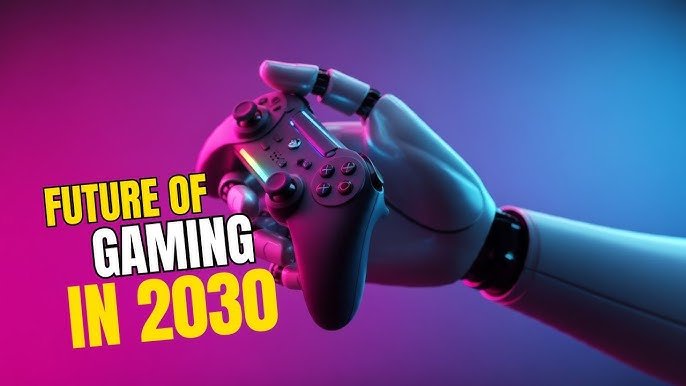
Gaming has never stood still. From pixelated arcade cabinets to massive open worlds and competitive esports, each decade has redefined how we play. As technology accelerates faster than ever, the question isn’t if gaming will change — it’s how radically.
So what might gaming look like in 2030? Let’s take a peek into the future of play.
Hyper-Immersive Experiences Will Be the Norm
By 2030, immersion won’t be a feature — it’ll be an expectation. Advances in virtual reality (VR), augmented reality (AR), and mixed reality (MR) will blur the line between the digital and physical worlds.
Players won’t just control characters; they’ll inhabit them. Expect:
- Ultra-light VR headsets with near-real visuals
- Haptic suits and gloves that simulate touch and movement
- AR games seamlessly layered onto real-world environments
Gaming worlds will feel less like simulations and more like alternate realities.
AI Will Transform How Games Respond to Players
Artificial intelligence will fundamentally reshape gameplay. Instead of scripted enemies and predictable storylines, games will feature adaptive AI that learns how you play.
In 2030:
- NPCs will remember past interactions
- Storylines will evolve based on player behavior
- Difficulty will adjust dynamically without menus
Every player’s experience could be genuinely unique, shaped by their choices and play style.
Cloud Gaming Will Replace Traditional Hardware
Powerful consoles and gaming PCs won’t disappear, but they’ll no longer be required. Cloud gaming will allow players to stream high-end games instantly to phones, TVs, tablets, and lightweight devices.
This means:
- No long downloads or hardware upgrades
- Instant access to massive libraries
- Gaming anywhere with a stable connection
Gaming will become more accessible than ever, breaking down barriers between casual and hardcore players.
Social Gaming Will Feel More Like Living Online
Games are already social spaces, but by 2030 they’ll function more like digital worlds than standalone titles.
Expect:
- Persistent online universes
- Player-owned spaces and communities
- In-game events, concerts, and shared experiences
- Seamless voice, video, and avatar-based interaction
Gaming won’t just be something you do — it’ll be a place where you hang out.
Player-Created Content Will Drive the Industry
The future of gaming is collaborative. More games will give players powerful tools to build worlds, characters, quests, and even game modes.
By 2030:
- User-generated content will rival developer-made content
- Players may earn real income from creations
- Games will evolve continuously through community input
Developers will act more like world architects, while players help shape what those worlds become.
Gaming Economies Will Feel More Real
Digital economies will grow more sophisticated, with virtual items, currencies, and progression systems carrying real value — whether through time investment, creativity, or competition.
While approaches will evolve, players can expect:
- Persistent progression across platforms
- More transparent in-game economies
- Better balance between monetization and fairness
The focus will shift from pay-to-win toward play-to-earn, create-to-earn, and skill-based rewards.
Accessibility and Inclusion Will Be Core Design Principles
By 2030, games will be built for everyone.
Advancements will include:
- Adaptive controls and interfaces
- AI-assisted difficulty and accessibility settings
- Broader representation in stories and characters
Gaming will continue expanding beyond traditional demographics, welcoming players of all ages, abilities, and backgrounds.
The Line Between Gaming and Reality Will Blur
Fitness games, educational simulations, professional training, and virtual workplaces will increasingly borrow from game design. Gamification will shape how people learn, work, and socialize.
Gaming won’t be an escape from reality — it’ll be a layer added to it.
Final Thoughts
The future of gaming in 2030 isn’t just about better graphics or faster hardware. It’s about deeper immersion, smarter worlds, stronger communities, and more meaningful player agency.
As technology evolves, one thing remains constant: the desire to play, connect, and explore. The games of 2030 won’t just entertain us — they’ll reshape how we experience digital life itself.
The future of play is closer than we think. 🎮🚀